The cricketing world is already buzzing with anticipation for the ODI World Cup 2027, set to be one of the most exciting tournaments in recent history. Scheduled to take place in South Africa, Zimbabwe, and Namibia, this edition marks the return of a format last seen 24 years ago, promising thrilling matches and intense competition among the world’s top cricketing nations. With about a year and a half to go, fans and experts alike are speculating whether Team India can replicate its past success and reach the finals once again.
A Trip Down Memory Lane: Hosts and Format
For cricket fans, the mention of South Africa and Zimbabwe evokes memories of the 2003 World Cup, which was jointly hosted by these nations alongside Kenya. The ODI World Cup 2027 will see a similar trio of hosts, with Namibia replacing Kenya as the third venue. This nostalgic return is more than just about geography—it extends to the tournament structure as well.
In a significant throwback, the 2027 World Cup will feature 14 teams, divided into two groups of seven. Each team will face every other team in their group, and the top three from each group will advance to the Super 6 stage. This format, reminiscent of the 2003 edition, ensures that early victories carry forward, adding strategic importance to each group match.
ODI World Cup 2027 Group Structure
| Group A | Group B |
|---|---|
| Team 1 | Team 8 |
| Team 2 | Team 9 |
| Team 3 | Team 10 |
| Team 4 | Team 11 |
| Team 5 | Team 12 |
| Team 6 | Team 13 |
| Team 7 | Team 14 |
(Teams to be finalized closer to the tournament.)
The Super 6 round will introduce the intriguing “points carry forward” rule. Teams advancing from the group stage will carry the points earned against the other qualifying teams into this stage. This means that a team that dominated its group could enter the Super 6 with a significant advantage, making every match in the group stage crucial. The top two teams from the Super 6 stage will then contest the semi-finals, culminating in the grand final.
Super 6 Round: Points Carry Forward Explained
| Team | Points Carried from Group Stage |
|---|---|
| Team A | 4 |
| Team B | 2 |
| Team C | 0 |
This system not only rewards consistency but also ensures that no team can afford to take any match lightly, keeping fans on the edge of their seats from start to finish.
India’s Hopes: Can History Repeat Itself?
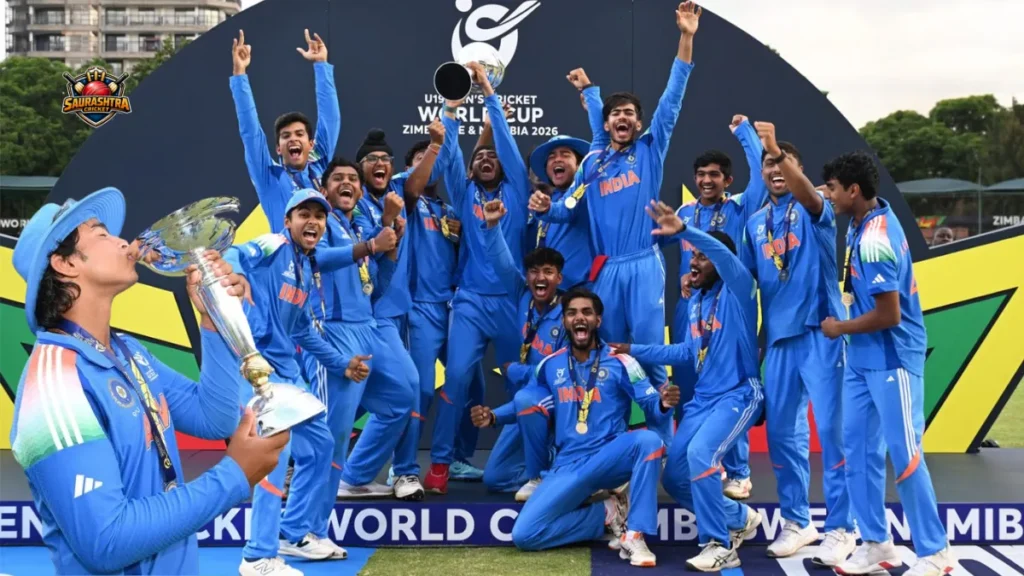
Team India enters the ODI World Cup 2027 with high expectations, especially after dominating the T20 format and winning the T20 World Cup consecutively. This success has renewed confidence among fans and players alike, who are eagerly awaiting the start of the ODI campaign. Historically, India has performed admirably in the three-nation format, reaching the final of the 2003 World Cup held in South Africa, Zimbabwe, and Kenya. Although Australia emerged victorious that year, the memories of India’s journey to the final still inspire hope for a similar, if not better, outcome in 2027.
Cricket analysts believe that the team’s current blend of youth and experience could make a significant impact. With seasoned players bringing stability and young talents adding unpredictability, India is seen as a strong contender for the trophy. The key will be consistency in the group stage and strategic play in the Super 6 round.
India’s Possible Road to the Final
| Stage | Key Focus Areas |
|---|---|
| Group Stage | Strong opening partnerships, consistent batting, disciplined bowling |
| Super 6 Round | Carry forward points, manage pressure matches, fielding efficiency |
| Semi-Final | Tactical decisions, countering top opposition players |
| Final | Peak performance, mental toughness, seizing key moments |
Fans are especially excited because the ODI World Cup 2027 offers a rare chance to relive the 2003 format, combining the nostalgia of past tournaments with modern cricketing talent. Many believe this alignment of format and history gives India an edge, particularly in understanding the nuances of multi-country hosting and the strategic importance of every match.
Looking Ahead: Venues and Schedule
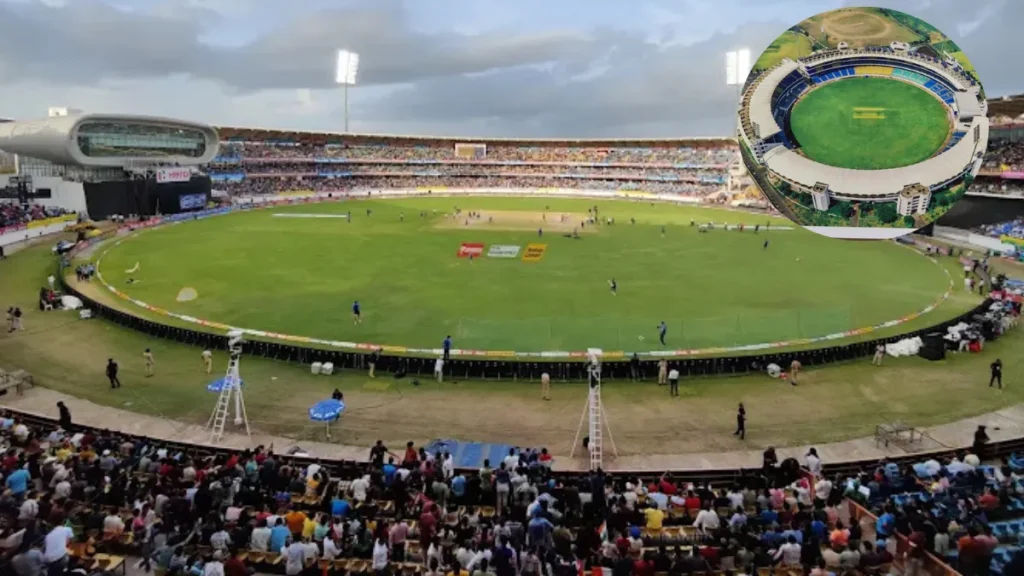
While detailed match schedules are yet to be announced, the tournament will cover iconic cricketing venues across South Africa, Zimbabwe, and Namibia. These stadiums are expected to host large crowds and provide excellent pitch conditions, adding to the excitement of the World Cup. The venues’ diverse climates and playing conditions will challenge teams to adapt quickly, making the ODI World Cup 2027 a test of skill, strategy, and stamina.
Tentative Host Venues
| Country | City | Stadium |
|---|---|---|
| South Africa | Johannesburg | Wanderers Stadium |
| South Africa | Cape Town | Newlands Stadium |
| Zimbabwe | Harare | Harare Sports Club |
| Zimbabwe | Bulawayo | Queens Sports Club |
| Namibia | Windhoek | Wanderers Cricket Ground |
These venues not only offer modern facilities but also bring in fans from around the globe, ensuring that the World Cup atmosphere remains electric throughout the tournament.
Read Also: Why Virat Kohli and Rohit Sharma Are Missing Vijay Hazare Trophy Matches – Full Story Explained
Conclusion
The ODI World Cup 2027 promises a fascinating blend of nostalgia and modern cricketing excellence. With its return to the 2003 format, 14 teams, multi-country hosting, and strategic points carry forward system, the tournament is poised to deliver edge-of-the-seat entertainment. Team India’s journey will be closely watched, as fans hope to see their team reach the finals once again and possibly lift the trophy, rewriting history.
With the countdown already begun, cricket enthusiasts are gearing up for a World Cup that honors the past while celebrating the future, making the ODI World Cup 2027 one of the most eagerly awaited events in the cricketing calendar.