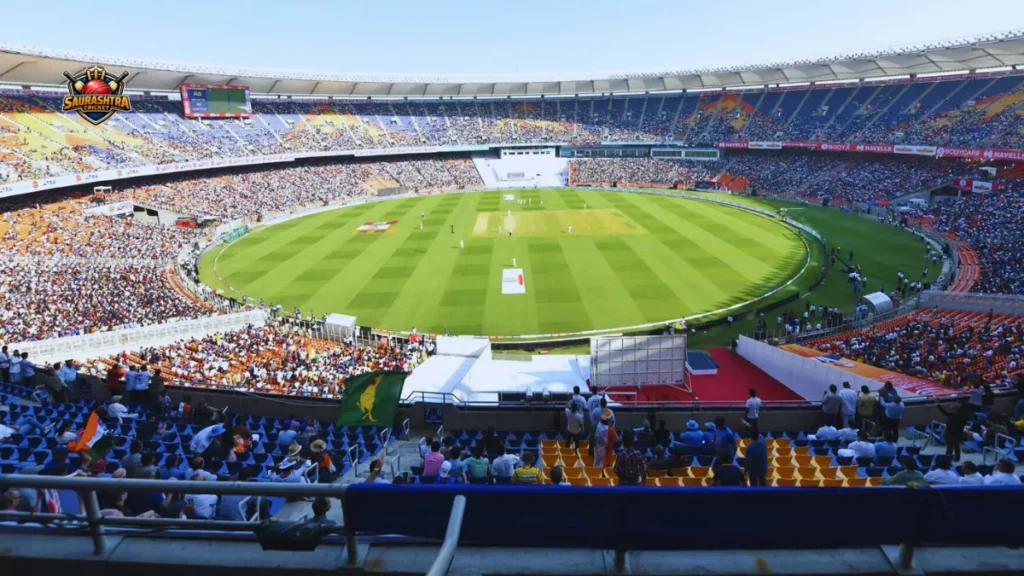
The Narendra Modi Stadium pitch report is one of the most searched cricket-related topics whenever a major international fixture, ICC tournament, or IPL match is scheduled in Ahmedabad. As the largest cricket stadium in the world, this iconic venue does not just host matches-it shapes them. From high-scoring white-ball thrillers to spin-dominated Test encounters, the pitch at Narendra Modi Stadium has delivered a wide range of cricketing narratives over the years.
Located on the outskirts of Ahmedabad along the banks of the Sabarmati River, the stadium-earlier known as Sardar Patel Stadium and popularly referred to as Motera-has evolved into a global cricketing landmark. Understanding pitch behavior here is essential for teams, analysts, fantasy cricket players, and fans alike.
This detailed news-style guide offers a complete breakdown of the Narendra Modi Stadium pitch report, covering pitch composition, batting and bowling conditions, format-wise behavior, toss impact, weather influence, historical evolution, and strategic insights.
Narendra Modi Stadium: Key Facts and Overview

Before diving into pitch behavior, it is important to understand the stadium’s background and infrastructure, which plays a significant role in how the surface behaves.
Narendra Modi Stadium at a Glance
| Feature | Details |
|---|---|
| Also Known As | Gujarat Stadium, Sardar Patel Stadium |
| Location | Ahmedabad, Gujarat, India |
| Established | 1982 |
| Seating Capacity | 132,000 |
| End Names | Adani Pavilion End, Jio End |
| Floodlights | Yes |
| Home Team | Gujarat |
| Curator | Bagira Thakur |
| Pitch Types | Red soil and black soil |
| Playing Surface | Grass |
| Current Local Time | 16:31, Tuesday, February 10, 2026 |
Built on land donated by the Gujarat state government, the original stadium was constructed in just nine months on a 50-acre plot. Over the decades, it has undergone several upgrades, most notably ahead of the 2006 ICC Champions Trophy, when new pitches, a modern outfield, floodlights, and covered stands were added.

Historical Significance of the Venue
The Narendra Modi Stadium holds a special place in Indian cricket history. It hosted its first Test match in November 1983 and has since been the stage for some of the most iconic moments in the sport.
Sunil Gavaskar reached the historic milestone of 10,000 Test runs here during the 1986–87 series against Pakistan. Seven years later, Kapil Dev became the highest wicket-taker in Test cricket at the same venue, surpassing Richard Hadlee with his 432nd wicket.
In earlier years, the pitch was known to assist bowlers significantly. Three of the first four Test matches at the venue produced outright results, which was rare in that era. However, over time, the surface slowed down considerably, leading to a phase where draws became common.
One of the most talked-about matches came in 2008, when South Africa bowled India out for just 76 on the opening morning and wrapped up the Test in three days, highlighting how unpredictable the pitch could be under certain conditions.

Narendra Modi Stadium Pitch Report: General Nature
The Narendra Modi Stadium pitch report cannot be summarized with a single description because the venue uses multiple pitches made from different soil types. This variety ensures that no two matches feel exactly the same.
In general, the pitch is considered balanced. Batters can score freely once settled, while bowlers-especially spinners-come into play as the match progresses. Bounce is usually true, which allows stroke-makers to play with confidence, provided they apply themselves early.
Pitch Surface and Soil Composition Explained
One of the most important aspects of the Narendra Modi Stadium pitch report is soil composition. The stadium features both red soil and black soil pitches, each offering distinct characteristics.

Soil Types and Their Impact
| Soil Type | Key Characteristics | Who Benefits Most |
|---|---|---|
| Red Soil | Better bounce, more carry, lively surface | Fast bowlers, stroke players |
| Black Soil | Slower, holds moisture, grips more | Spinners, defensive bowlers |
Red soil pitches tend to assist fast bowlers early in the game and allow batters to trust the bounce. Black soil surfaces, on the other hand, are slower and become increasingly spin-friendly as the match wears on.
The ground staff regularly rotates pitches, ensuring freshness and variety. This rotation is one of the main reasons teams closely analyze pitch reports before finalizing their playing XI.
Batting Conditions at Narendra Modi Stadium
From a batting perspective, the Narendra Modi Stadium pitch report is largely encouraging across formats, though early caution is advised.
In the initial overs, especially with a new ball, batters may face slight seam movement or swing. Once the ball loses its shine, conditions improve significantly. The pitch allows clean stroke play, and timing the ball becomes easier.
In limited-overs formats, aggressive batters thrive here, particularly when set. However, reckless shot-making can lead to trouble, as the pitch rewards technique more than blind power.
Bowling Conditions and Assistance
The pitch at Narendra Modi Stadium offers something for all types of bowlers, but adaptability is key.
Fast bowlers who hit the right lengths can extract bounce, especially on red soil pitches. Under lights, there is often a hint of swing, making the opening overs crucial.
As matches progress, spinners become increasingly effective. The surface slows down, and the ball grips, making turn and variation more pronounced. Bowlers who rely on accuracy, flight, and subtle changes in pace tend to succeed the most.
Spin vs Pace: Who Holds the Advantage?
A closer look at the Narendra Modi Stadium pitch report reveals a fascinating contest between spin and pace.
In white-ball cricket, fast bowlers often dominate the powerplay with movement and bounce, while spinners control the middle overs. This balance allows captains to rotate bowlers strategically.
In Test matches, spinners generally play a decisive role from the third day onwards. As the pitch develops cracks and rough patches, turn becomes sharper, and batting grows increasingly difficult.
Narendra Modi Stadium Pitch Report for T20 Matches
T20 matches at this venue are often high-octane affairs. The Narendra Modi Stadium pitch report for T20s suggests a batter-friendly surface, particularly in night games.
The ball comes nicely onto the bat, making timing easier. Scores above 180 are common, and well-set teams have breached the 200-run mark on multiple occasions.
However, bowlers who rely solely on pace often struggle. Slower balls, cutters, and variations are far more effective, especially in the second half of the innings.
Dew plays a major role in night matches, making bowling difficult in the second innings. As a result, teams often prefer to chase after winning the toss.
Narendra Modi Stadium Pitch Report for ODI Matches
In One Day Internationals, the pitch offers a fair contest between bat and ball. According to the Narendra Modi Stadium pitch report, teams batting first usually target scores in the 280–320 range, depending on conditions.
Batting remains relatively comfortable for most of the innings, but patience is required. Stroke-making without proper shot selection can lead to wickets, especially against spin in the middle overs.
Fast bowlers who can reverse swing the ball in the later stages often emerge as match-winners. Overall, ODIs at this venue are competitive and tactically engaging.
Narendra Modi Stadium Pitch Report for Test Matches
Test cricket presents a completely different challenge. The Narendra Modi Stadium pitch report for Test matches often highlights how conditions evolve dramatically over five days.
Day one usually offers the best batting conditions, with consistent bounce and minimal turn. As the match moves into days two and three, the pitch slows down, bringing spinners into play.
By days four and five, batting becomes extremely challenging. Turn increases, bounce becomes uneven, and survival requires solid technique and patience. This is why teams winning the toss often choose to bat first in Test matches.
Weather Impact on Pitch Behavior
Weather is a critical factor in the Narendra Modi Stadium pitch report. Ahmedabad typically experiences dry and hot conditions, which accelerate pitch deterioration in longer formats.
High temperatures dry out the surface, making it dusty and spin-friendly. In evening matches, dew becomes a significant factor, especially in limited-overs cricket.
Dew reduces grip for bowlers and makes fielding tougher, which is why chasing teams often enjoy an advantage under lights.
Toss Factor at Narendra Modi Stadium
The toss plays a major role in match outcomes here.
Toss Preferences by Format
| Format | Preferred Decision After Winning Toss | Reason |
|---|---|---|
| T20 | Bowl first | Dew advantage while chasing |
| ODI | Bowl first (night games) | Easier batting under lights |
| Test | Bat first | Pitch deteriorates later |
Captains consider pitch type, weather forecast, and match format before making their decision.
Average Scores at Narendra Modi Stadium
Understanding average scores helps decode the Narendra Modi Stadium pitch report more accurately.
Format-Wise Average Scores
| Format | Average First-Innings Score |
|---|---|
| T20 | 160–190 |
| ODI | 280–300 |
| Test | 350–450 |
These figures highlight the versatility of the surface and its ability to adapt to different formats.
Boundary Dimensions and Their Influence
The stadium features varying boundary lengths, with some sides shorter than others. This encourages batters to target specific areas for big shots.
At the same time, the massive playing area rewards athletic fielding and smart placement. Sixes are achievable, but good running between the wickets remains essential.
Batting First vs Chasing: Performance Trends
The Narendra Modi Stadium pitch report shows that chasing teams often enjoy a slight edge in limited-overs matches due to dew and improved batting conditions.
However, teams batting first can still succeed if they post a strong total and apply scoreboard pressure. In Test cricket, batting first remains the preferred strategy.
Key Strategies for Teams Playing at Narendra Modi Stadium
Teams preparing for matches here usually focus on balance. Selecting the right mix of fast bowlers and spinners is crucial.
Batters must build partnerships and avoid unnecessary risks early. Bowlers need to adapt quickly, reading the surface and adjusting their lengths and variations accordingly.
Teams that adjust faster during the match generally gain the upper hand.
How the Pitch Has Evolved Over the Years
The Narendra Modi Stadium pitch report has changed significantly over time. Earlier, the surface was known to heavily favor bowlers, particularly spinners.
Modern pitch preparation techniques have made surfaces more batter-friendly without removing competitiveness. This evolution has allowed the stadium to host major ICC events and high-profile international fixtures successfully.
Also read: MA Chidambaram Stadium Pitch Report: Chepauk Surface Analysis, History, and Match Insights
Conclusion: on Narendra Modi Stadium Pitch Report
The Narendra Modi Stadium pitch report showcases a venue that offers balance, variety, and excitement. Whether it is a fast-paced T20 contest or a tactical Test match, the pitch adapts beautifully to different formats.
With world-class facilities, multiple pitch types, and thoughtful preparation, the stadium continues to be one of the most fascinating and influential cricket venues globally. Understanding pitch behavior here is essential for teams, analysts, and fans who want deeper insight into the game.
As cricket continues to evolve, the Narendra Modi Stadium remains at the heart of the sport-challenging players, thrilling audiences, and shaping match outcomes like few venues in the world.